FEL key
A low-level Allwinner recovery control. Holding it during the correct startup procedure can place the board in FEL mode so an image or bootloader can be recovered over USB when normal booting is unavailable.
The experimental build is now a completed project: a full AllStarLink node and dashboard stack, documented and packaged as a reproducible guided installation.
From working build to guided installer
The clear enclosure makes the active cooling, GPIO, network, and USB connections visible. The finished package makes the software path equally clear for the next operator.
The completed hardware
These photographs document the exact BPI-M4B V1.0 board, enclosure, connector access, GPIO, active cooling, component layout, and underside used in the completed build.
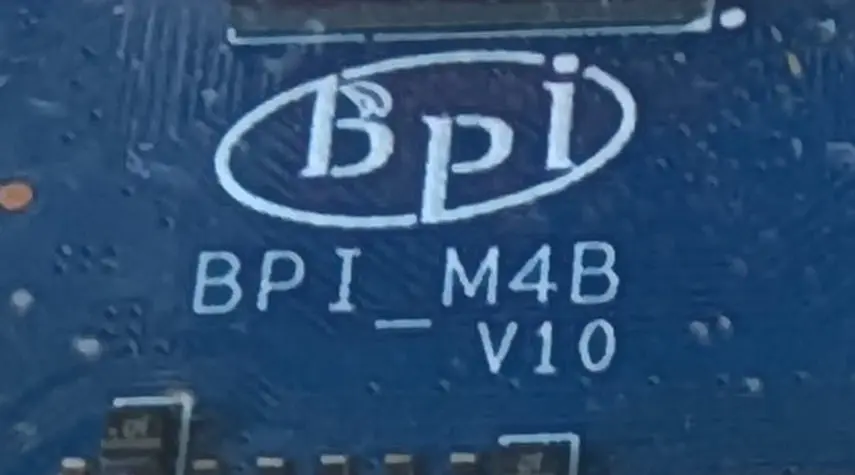
The silkscreen confirms the hardware used for this completed reference build: BPI-M4B V1.0.
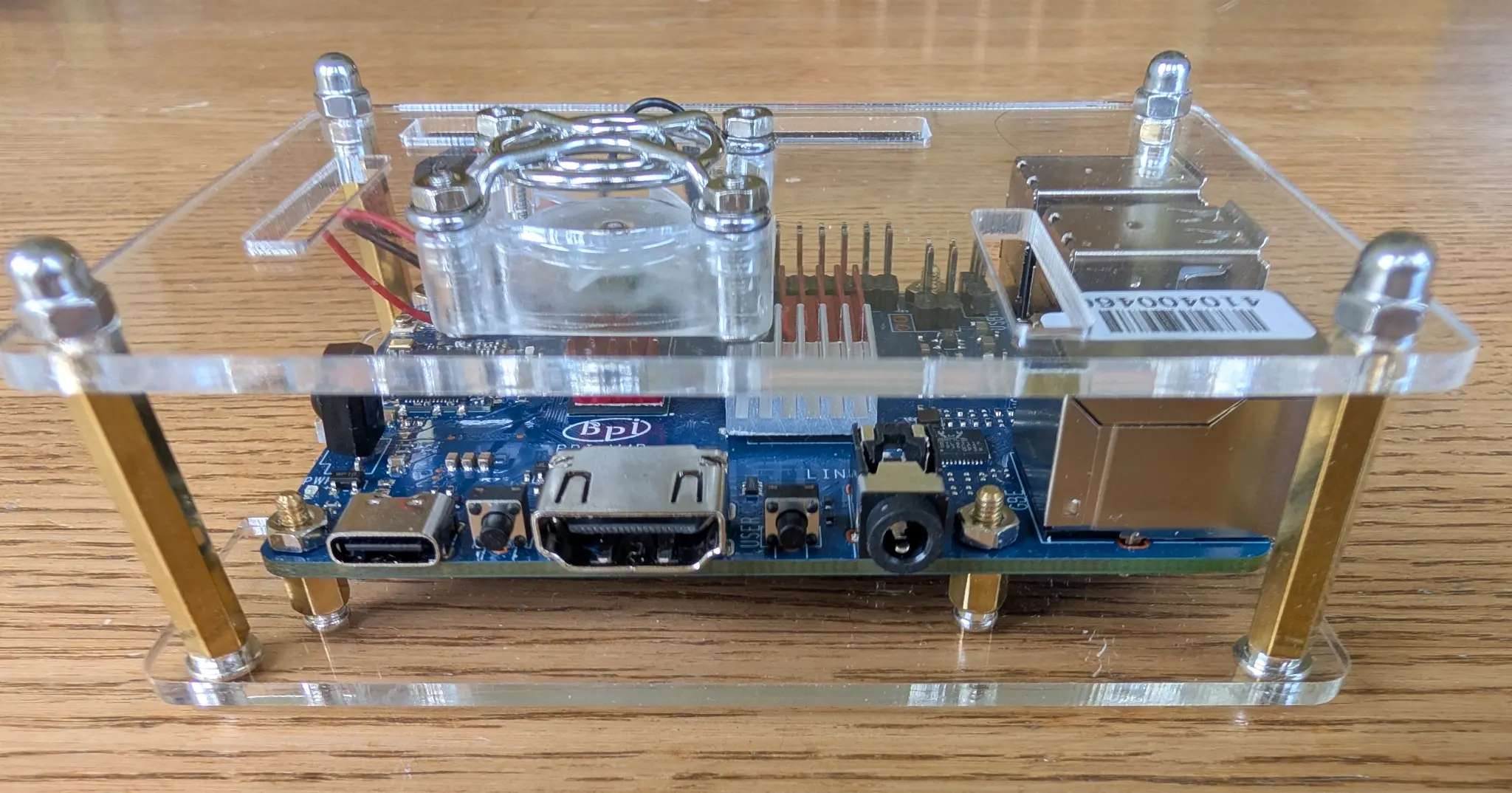
USB-C power/OTG, HDMI, the reset and user controls, the 3.5 mm A/V jack, and Gigabit Ethernet remain accessible through the open-sided enclosure.
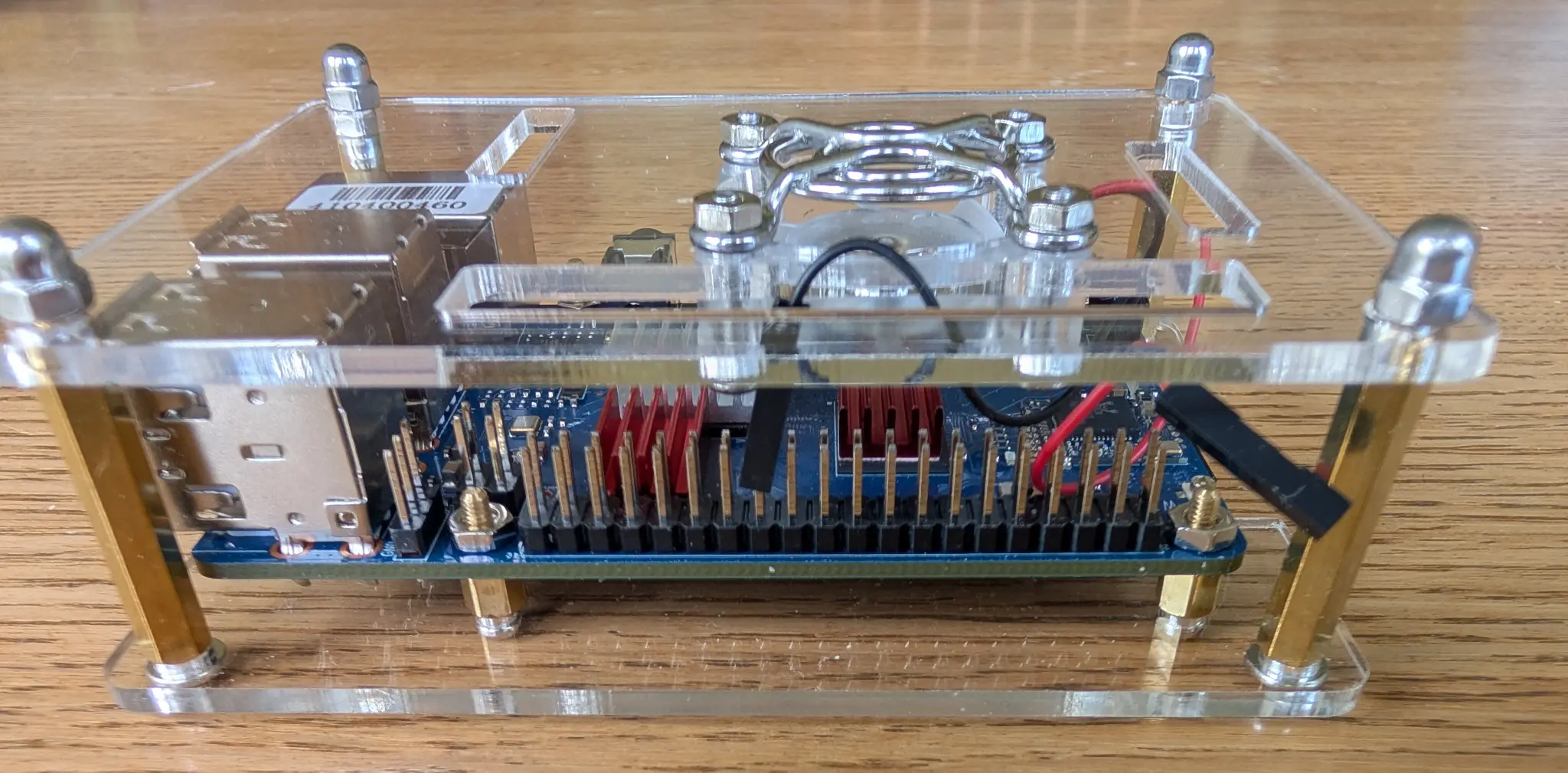
The 40-pin GPIO header remains exposed while the clear fan and heatsinks provide visible, direct cooling.
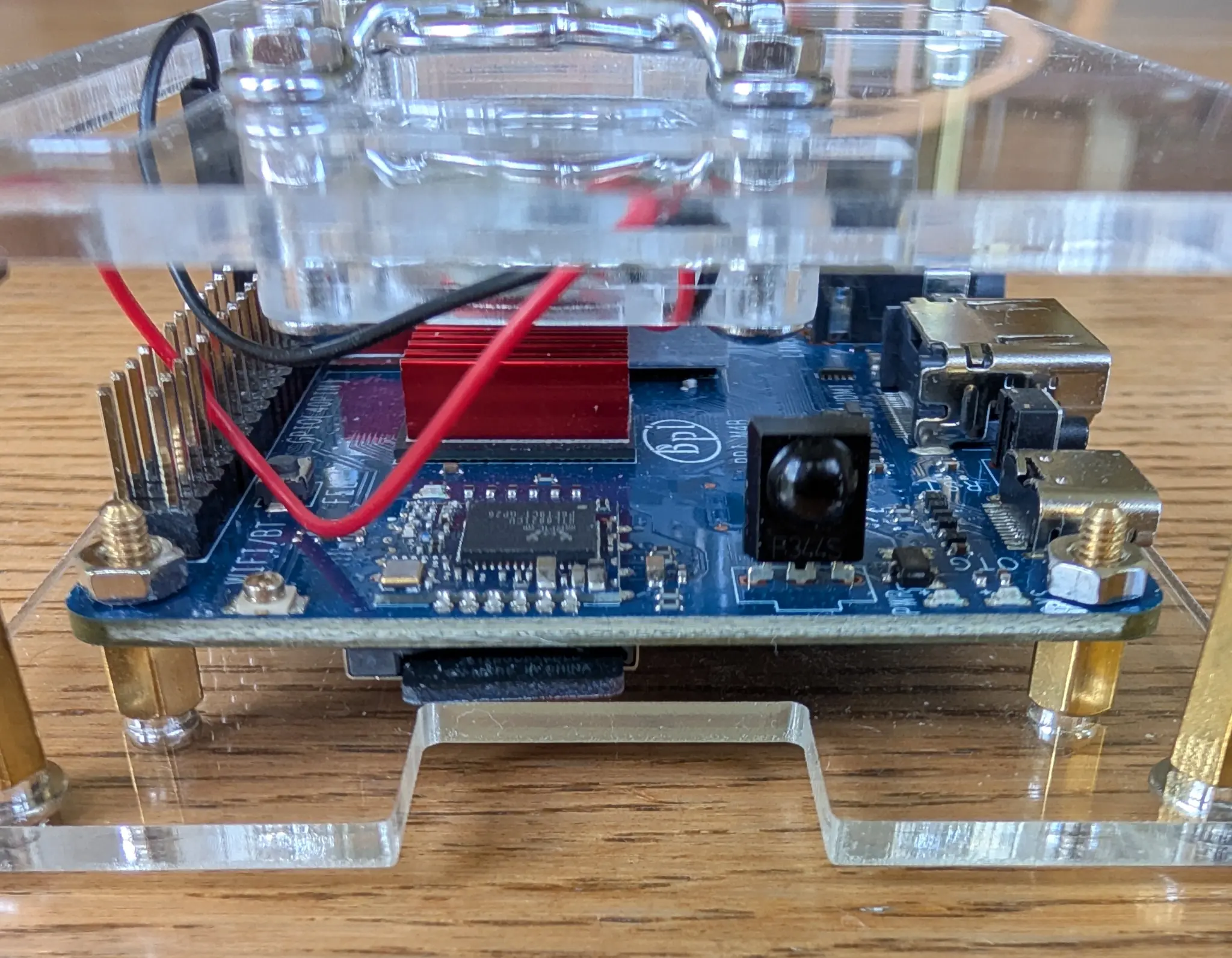
A close side view shows the processor heatsink, supporting components, cooling assembly, and the clear standoff construction.
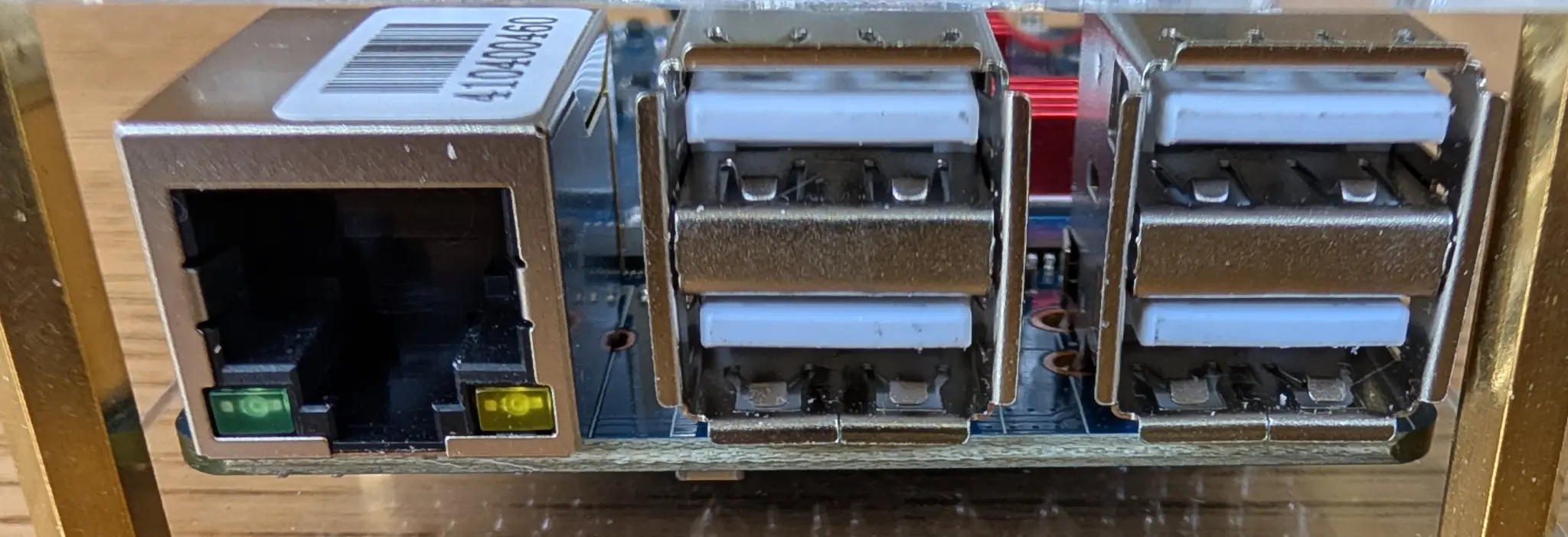
A dedicated Gigabit Ethernet connection and four USB-A ports provide the practical I/O needed by the node and its UCI80 interface.
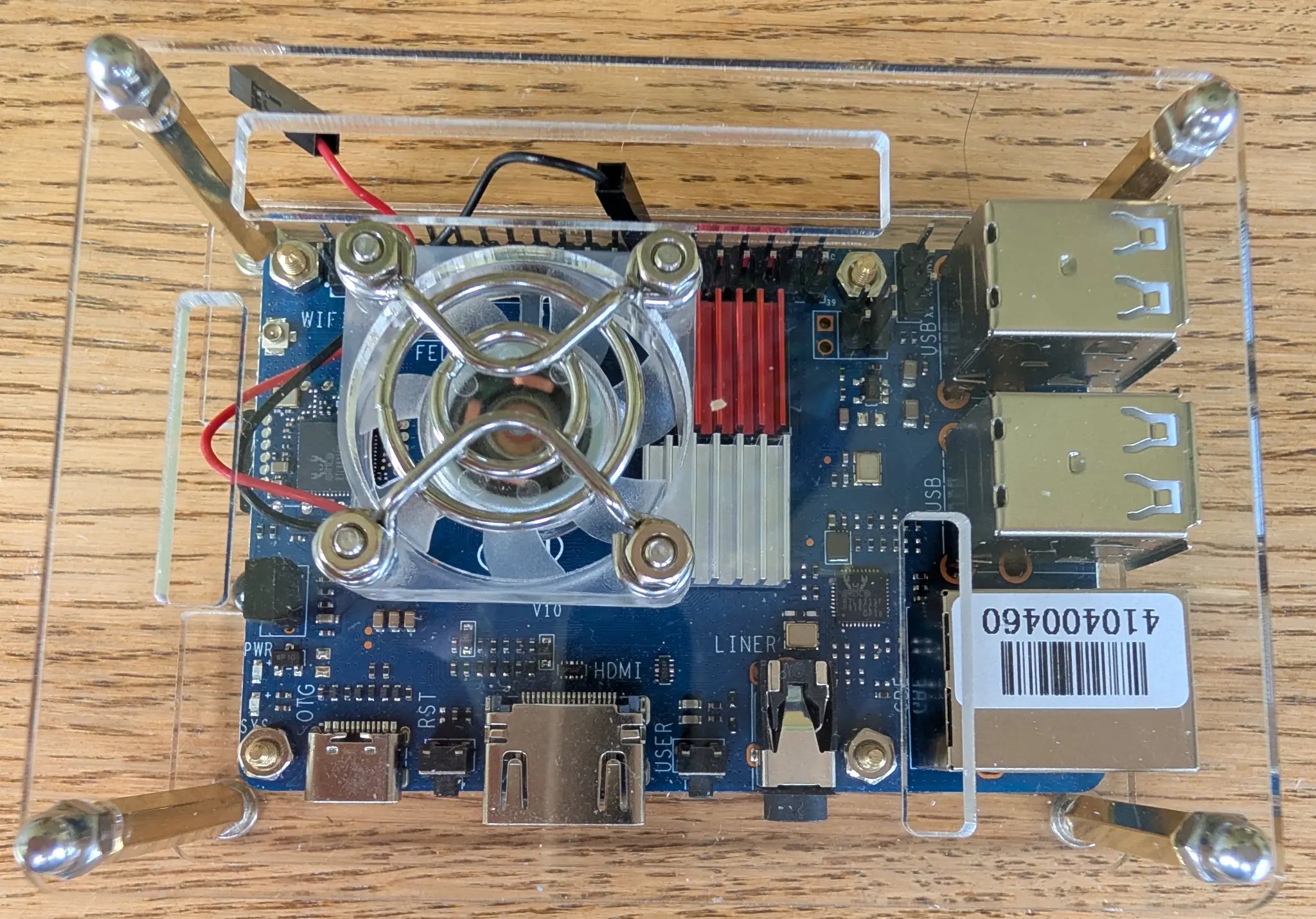
From above, the active fan, two heatsinks, 40-pin GPIO header, USB-C power/OTG, HDMI, 3.5 mm A/V, Ethernet, and USB banks are easy to identify.
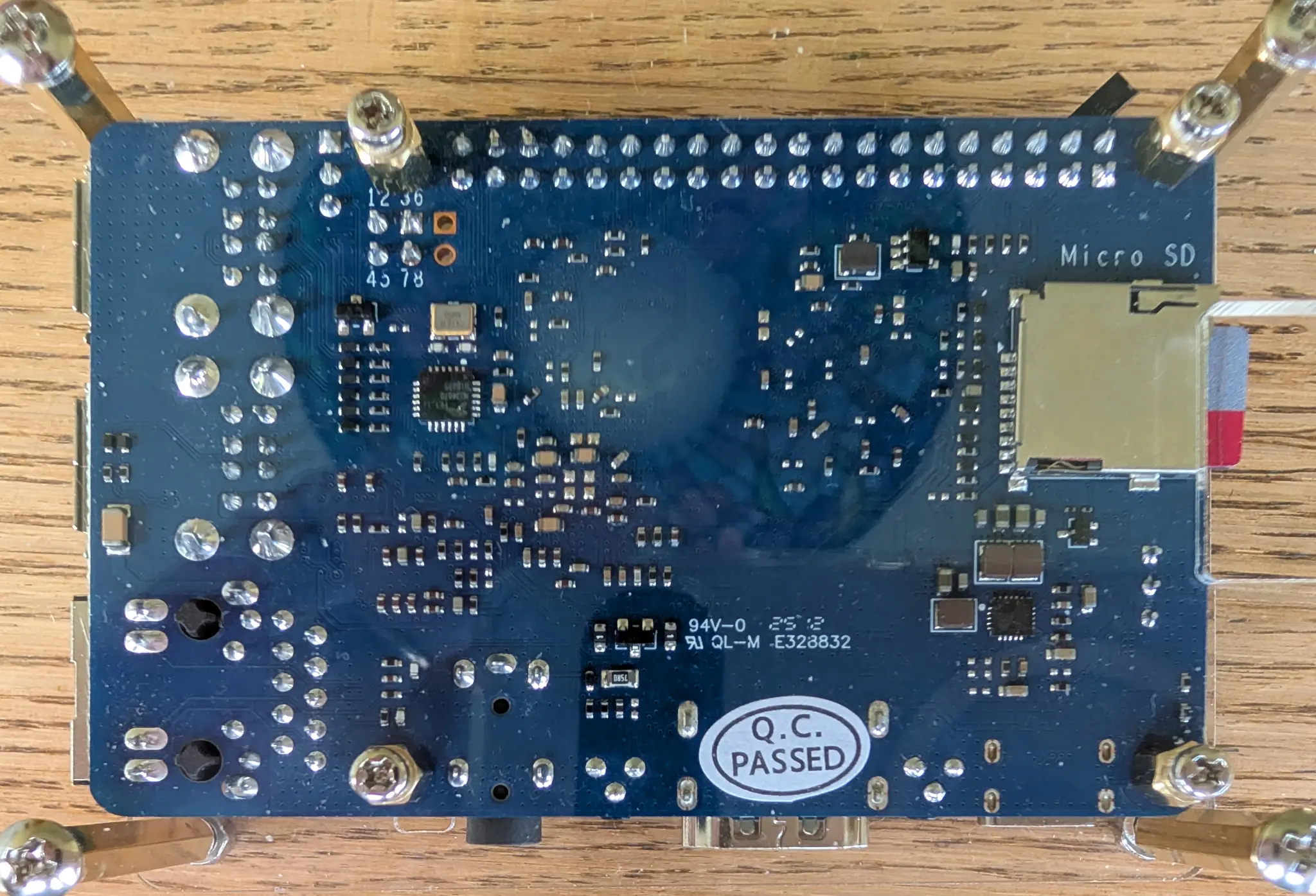
The underside view documents the board layout, soldered connections, quality-control mark, and accessible microSD slot.
Board layout & feature guide
The labeled layout reveals why the M4 Berry is such a flexible little platform: it combines ordinary desktop connections with recovery, debugging, expansion, storage, wireless, and user-control features normally hidden from a finished appliance.
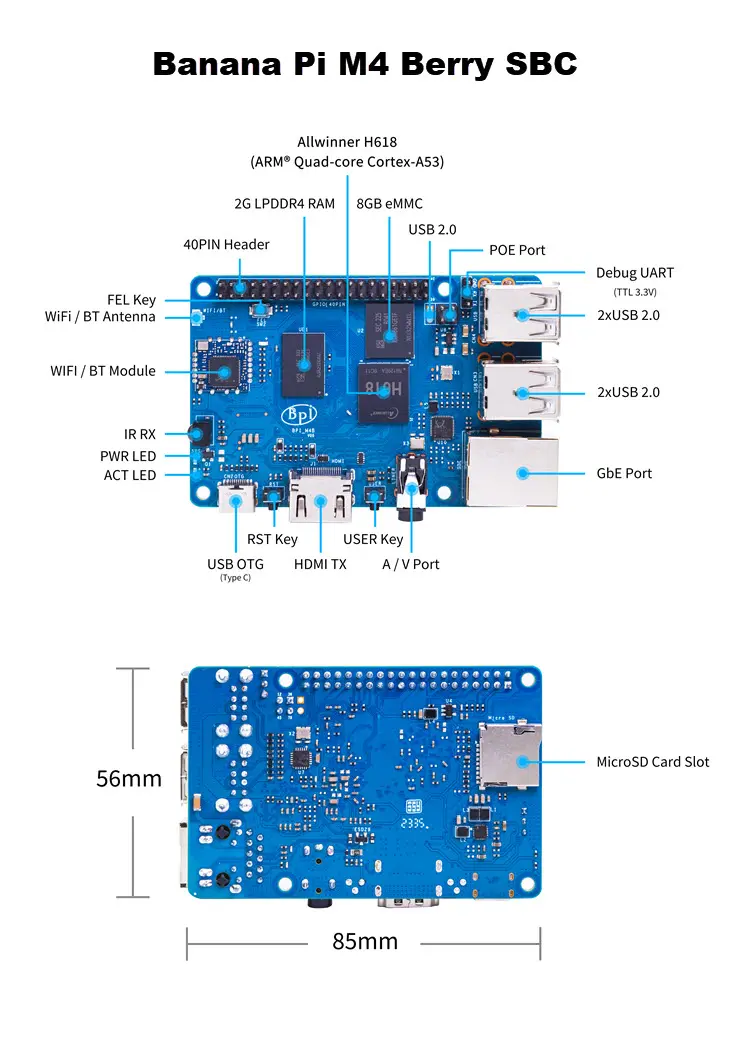 Open the layout full size
A low-level Allwinner recovery control. Holding it during the correct startup procedure can place the board in FEL mode so an image or bootloader can be recovered over USB when normal booting is unavailable.
A 3.3-volt TTL serial console for seeing early boot messages and troubleshooting before networking or the normal display is working. It requires a compatible 3.3 V USB-to-TTL adapter—not an RS-232 cable.
Pins for adding the proper optional Power-over-Ethernet hardware, letting one network cable carry data and power in a suitably equipped build. The header is not a direct 48 V input; use only the correct PoE module and wiring.
A programmable physical button that software can turn into a convenient action—such as an orderly shutdown, a service command, or another operator function. Its behavior depends on the installed configuration.
Allwinner H618 quad-core processing, 2 GB LPDDR4, 8 GB eMMC, a 40-pin expansion header, four USB-A ports, USB-C power/OTG, HDMI, a 3.5 mm A/V output, Gigabit Ethernet, Wi-Fi/Bluetooth with antenna connection, an IR receiver, status LEDs, and a microSD slot.
Project overview
A completed Banana Pi M4 Berry node with ASL3, AllScan, Allmon3, Supermon 8+, a UCI80 radio interface, persistent networking, and a guided installer another operator can follow.
The USB communications interface supports simultaneous transmit and receive operation, making this a true full-duplex AllStarLink node—not merely a conventional simplex hotspot.
Known limitations
Complete release
The website records the completed hardware and verified result. The download contains the guided installer, operator documentation, supporting files, and verification material needed to reproduce the node.
One download containing the complete operator package for building the verified ASL3 node and its three-dashboard web stack.
DownloadUse at your own risk. No warranty. Review the included START-HERE material before installation, follow the power-selection warning, and keep backups of your own configuration.